When I spoke about international students being trapped in a form of “modern slavery”, I expected discomfort and backlash. Phrases like “they chose to come here” or “they should be grateful” are familiar responses. But if the term makes us uncomfortable, it’s worth asking why the Australian Government itself has used language that points to systemic exploitation.
In 2024, the Home Affairs Minister publicly stated that Australia’s migration system was not just broken, but in “tatters”, acknowledging that exploitation had become a design feature over the past decade. That admission matters. It reframes this issue as structural, not incidental.
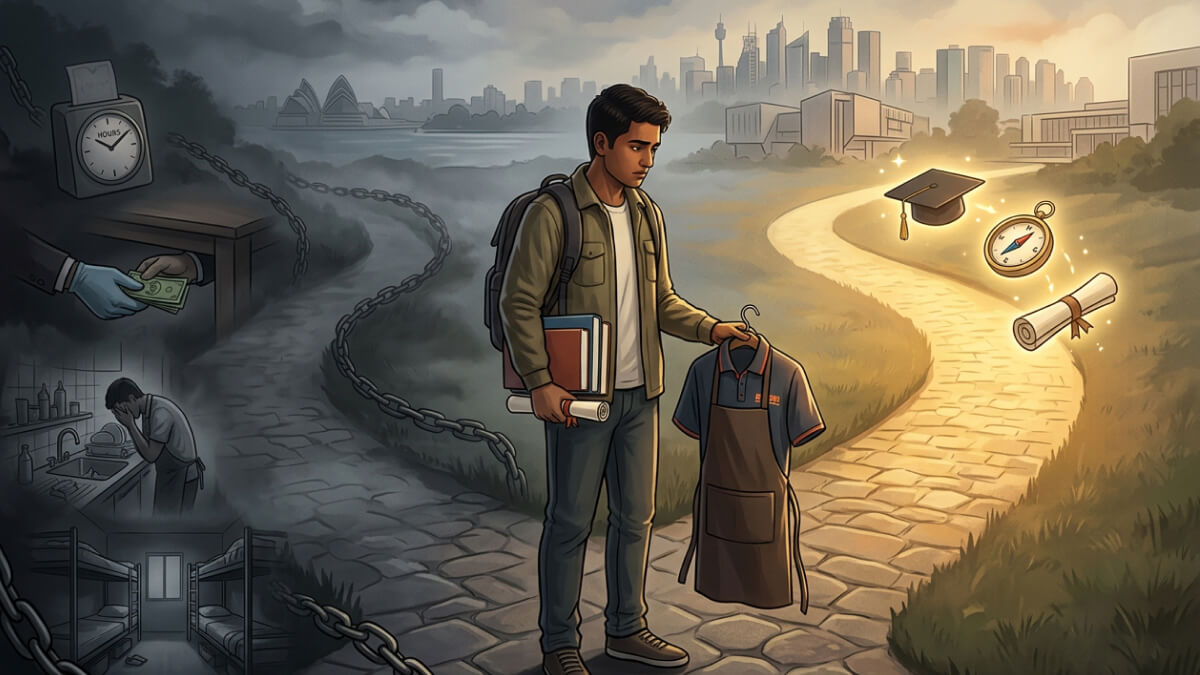
For many students, the reality is economic coercion. Tuition fees of $30,000 – $50,000 for qualifications of questionable value create debt that must be serviced. Survival then depends on long hours in low‑paid, insecure work, often well beyond legal limits. Reviews and inquiries have already documented serious abuses, including links to organised crime and trafficking, using student visas as a labour supply mechanism.
If someone is working 50 hours a week at sub‑minimum cash wages to repay debt for a visa that can be cancelled at any time, it’s reasonable to question how “free” that arrangement really is.
-
An “Australian education” is meaningless where so‑called colleges function primarily as work‑permit shops.
-
International students pay taxes, private health insurance and superannuation they may never access.
-
Choice under extreme financial pressure is not the same as genuine freedom, particularly when the promise of permanent residency is dangled but rarely delivered.
Education is promoted as a $40+ billion export industry, but the uncomfortable truth is that we have also imported a highly vulnerable permit class of workers. They keep cafes, cleaning services and aged care running while having no political voice, limited rights and constant uncertainty.
This is not an attack on Australia. It is a defence of the “fair go” we claim to value. If a system is acknowledged by government as being exposed to “grotesque abuses”, then moral responsibility sits with all of us.
We can debate terminology, or we can confront reality. Until the PR mirage is replaced with genuine pathways, fair wages and real protections, calling this modern slavery is not exaggeration. It is an indictment of a system that needs urgent reform.
This conversation doesn’t end here. I go deeper on Just Call Me Bridget podcast, including what real reform could actually look like.
Continue the conversation. Follow Just Call Me Bridget wherever you listen.